Local SEO (2025): A Guide to Ranking on Page One of Google Maps for Your Business
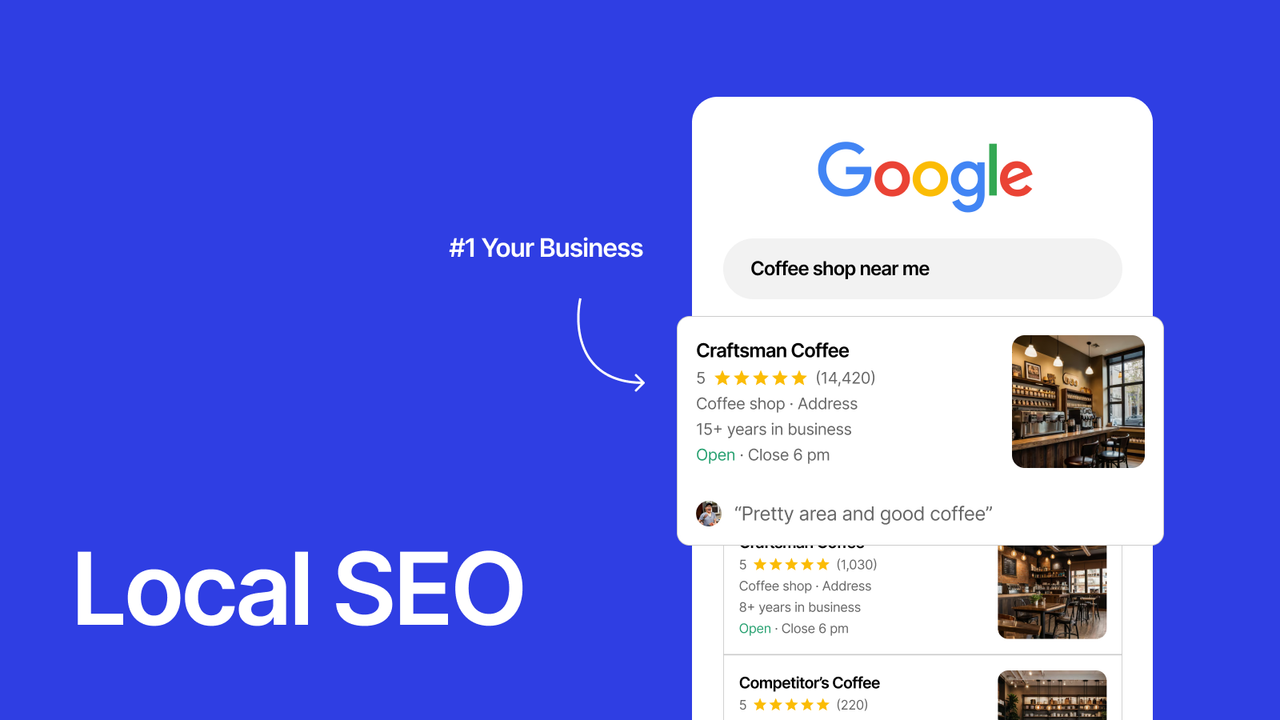
If you still think "Local SEO = just dropping a pin on Google Maps"… let me stop you right there, because the real world in 2025 is far more competitive than that. Your Google Business Profile (GBP) has to be solid, your reviews have to be credible, your website content has to deliver, and sometimes even your opening hours affect your ranking.
Whoever is open when people are searching has an easy chance to jump ahead (Google has confirmed that "openness" really is one of the signals).
In this article I'll walk you through the big picture of Local SEO today, the key updates that have actually happened, the mechanics that affect ranking and decisions, a step-by-step 90-day approach, plus the common pitfalls and how to recover when your profile gets suspended, so that searches from nearby genuinely turn into sales.
What is Local SEO (and why start with Google Business Profile)?
Local SEO is about making your shop or business discoverable through nearby searches, such as "coffee shop near me" or "dentist Rama 9." The place where everything starts is your Google Business Profile (GBP), because it's the "digital storefront" that shows up on both Search and Maps. When you fill in complete, accurate information, verify your identity, and keep your opening hours updated, your chances of showing up rise immediately, which lines up directly with Google Support's guidance.
In the restaurant and bar space, earlier this year Google began rolling out a "What's Happening" zone to showcase weekly promotions and events on the profile page, making it clearer to communicate what's "happening now" (starting in some countries and in the Food & Drink category). If you're in this group, posting with a plan can boost engagement on your profile page very effectively.
Source: https://www.pinmeto.com/blog/google-business-profile-guidelines-2025
What does Local SEO look like in 2025?
Local SEO isn't just about "being found," it's about "earning belief and a decision" on that same results page. Two things stood out clearly over the past year:
- Google added live-content features to profiles, especially for the Food & Drink group, such as "What's happening," where a shop can show this week's promotions and events right in the search results, drawing the eye and boosting CTR without people having to click through to the website first.
- The review battlefield got tougher, both in policy and in the crackdown on fake reviews. Google gave a commitment to the UK regulator that it would remove reviews deemed misleading and ban repeat offenders, add a system for flagging suspicious reviews, and place warning labels on profiles to protect consumers. The result is that shops that pump up quick star ratings risk getting banned hard.
Your profile has to be kept updated like a real storefront, with credible social proof, and you can't break the rules, because today Google is more serious than before.
The profile matters more than the website (for Maps)
When it comes to landing in the "Local Pack" (the three businesses shown in the search results), signals from GBP carry a lot of weight, from the keywords in your categories (primary/secondary), your service information (Services), and reviews, to your "open now" status
at the moment someone searches, which Google has confirmed: "openness" really is one of the factors in ranking on the map.
As for the profile elements that can move your ranking, there's a case study from Sterling Sky that tested adding "Custom Services" and saw rankings improve significantly on the Maps page (well suited to service work that describes tasks in fine detail), and there are also documented cases where secondary categories helped surface more related search terms.
But the website still matters for "decisions" and "Local Organic," because text on your website can appear as "Justifications" next to the listing to explain why you're relevant to that query, such as "the website states…," "reviews say…," or "latest post…," which genuinely affects whether customers click and call.
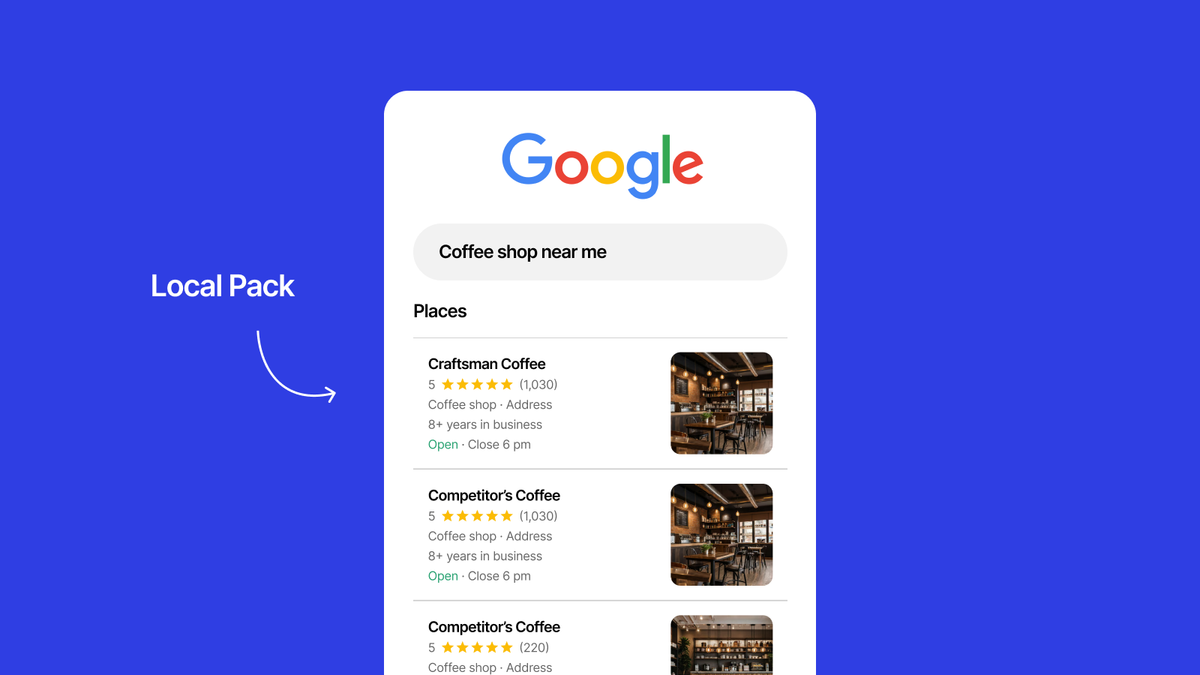
Google local pack example
Put simply, if you want to land in the Local Pack, you have to organize your GBP so it's "accurate" and "complete," make customers feel confident enough to reach out, and arrange your website to "confirm" the promises your profile makes.
Reviews must be transparent and consistent
2025 data from BrightLocal says 27% of consumers use only "one source" to read reviews before deciding, up from the previous year, while most still read at least two sources. The main shift is that review reading is getting "narrower but deeper," so the text in a review matters even more, because it also becomes a justification.
Strategies that work in the real world:
- Ask for a review right after the service is done, in person and briefly, with a direct link to the review-writing page.
- Encourage people to leave specific reviews, telling them to describe the particular service, such as "replaced the AC compressor" rather than just "good service," because wording like this matches search queries and can pull up a "Reviews" justification next to your profile.
- Avoid every form of "buying reviews," because both Google's policy and the latest crackdown are dead serious; you'll get reviews removed, get warned, or worst case, lose credibility for the whole brand.
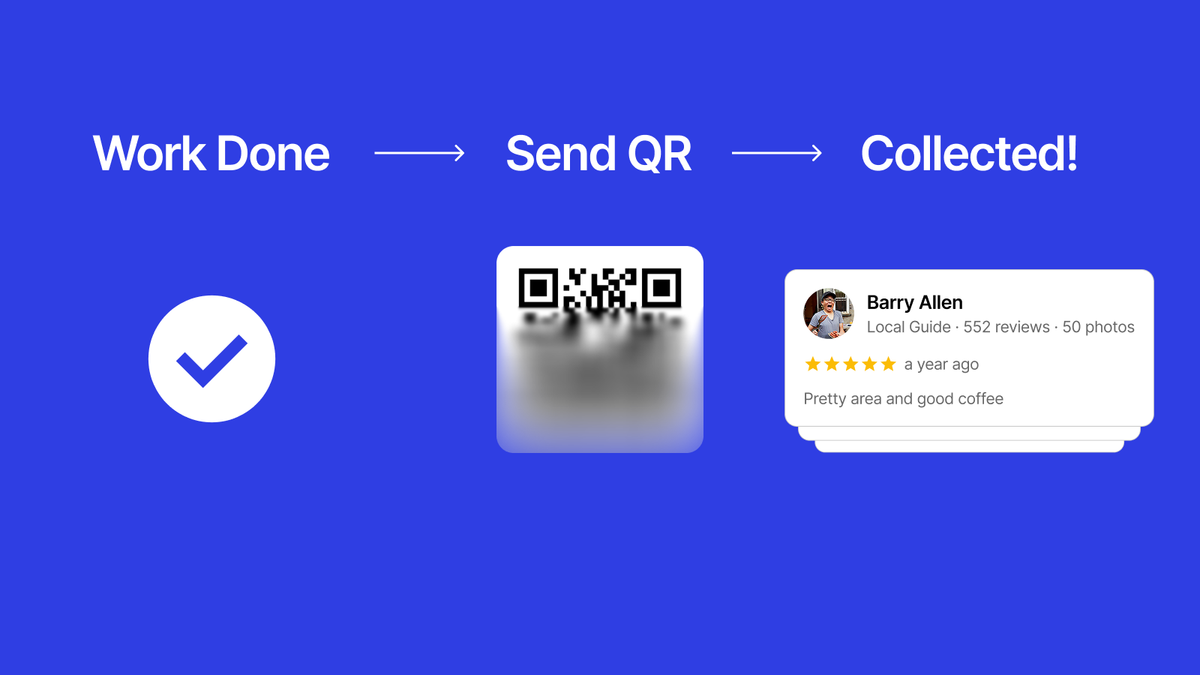
post-service review request flowchart for local business
Service + Location pages + proof of expertise
Your website doesn't have to be complex, but don't "cram everything onto one page." I like the "Service Page x Location Page" approach: have a page for each service (such as "AC cleaning" or "cavity extraction"), then a separate Location/branch page that includes your NAP, an embedded map, storefront photos, parking instructions, a starting price, and an FAQ. This helps Google understand your "relevance" and makes customers feel "close" before they've even left home.
Add content that can be picked up as Justifications, such as the phrase "same-day urgent repairs" on your website, update posts on GBP, or your latest product/service photos, then measure with UTM on the Website/Call buttons in your profile to see how much "traffic from GBP" converts into chats, appointments, or sales (BrightLocal summarizes the conversion factors on GBP quite well; photos, reviews, and short offers affect calls and directions).
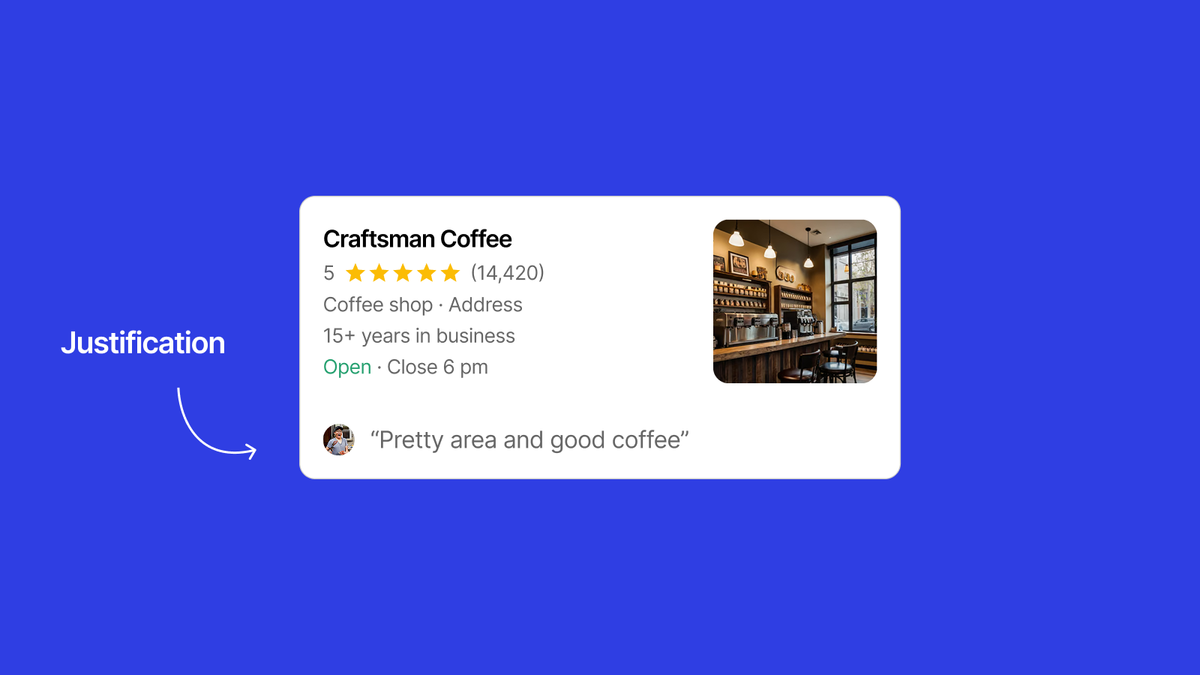
customer review snippet used as Google local justification
Does distance beat everything?
Proximity is still the main gravitational pull of the map, which means we might land in the top 3 in our own neighborhood but drop in ranking farther away, not because we did anything wrong, but because of how the system naturally works.
There's been some debate over whether specifying Service Areas helps ranking. A 2024 roundup of opinions says some people saw an effect and some didn't, but the conclusion still leans toward "not a direct factor," so don't expect to change your ranking by just ticking off areas. Better to focus on categories, services, reviews, and on-point content.
For shops that want to "expand their radius," I recommend these three approaches: create website pages for your target neighborhoods with real cases from those areas, collaborate with local pages or communities to generate mentions (which helps both the brand and local organic), and use Google Ads / Local Services Ads to target specific locations when necessary.
Keep in mind that Local Services Ads charge "per lead," unlike Google Ads which charges "per click," making them well suited to service businesses that can take customers directly by call or message.
Common mistakes, and how to revive a profile
The common pitfalls are:
- "Mismatched categories" that make your profile compete in the wrong arena.
- "Inaccurate opening hours" that drop your ranking during prime time.
- "Short or repetitive reviews" that don't help local search queries.
- And "too few or outdated photos" that leave customers unsure.
On top of that, a profile can get suspended if the information doesn't match your documents or location, or if there's risky behavior. Online you'll find business owners who say they got banned even after running a real business for years.
The safe move is to keep evidence of your location, signage, and licenses ready, and to respond and verify fully when your case is reviewed.
Another update that helps with readiness: many cases today require a "video-call verification" of the profile. Prepare your shop sign, the interior, and your documents so they're clearly visible on the call, which will get you through faster and reduce the chance of being rejected.
Summary
Local SEO isn't a pin on a map; it's a "storefront sales system" that plays out on the search results page in a split second. A complete, fresh profile + reviews with context + a website that confirms the promises = a greater chance of being clicked, called, and visited in person.
All the more so in 2025, when Google is strict about credibility and adds eye-catching features, whoever acts first wins first. I'll sum it up simply: "accurate (categories/services), fresh (posts/photos/hours), clean (use real reviews), and measured." Get all of that done, give it about 60 to 90 days, and the results will start to settle and grow.